
Book Review: Speaking for the Dead: The Human Body in Biology and Medicine
- June 3, 2026
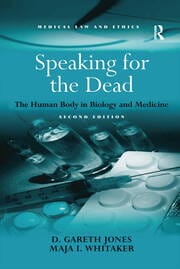
Speaking for the Dead: The Human Body in Biology and Medicine by D. Gareth Jones and Maja I. Whitaker is a thoughtful and wide-ranging examination of the ethical questions surrounding the human body in biology, anatomy, and medicine.
This second edition builds on the first edition, Speaking for the Dead: Cadavers in Biology and Medicine, which was published in 2000 by D. Gareth Jones. The updated edition reflects new developments in anatomy and biology and broadens the focus beyond cadavers alone. By changing the subtitle to The Human Body in Biology and Medicine, the book emphasizes the idea that the deceased human body and the living human body should be understood as part of a continuum.
A major strength of the book is the way it asks difficult but necessary questions. Where do bodies for dissection come from? Do deceased bodies have ethical significance? Do they have dignity? What can and cannot be done with them? What has historically been done with them? These questions are central to the book’s purpose and guide its discussion of anatomical work, medical practice, and biological research.
The second edition is also described as better organized and more accessible than the first. The chapters have been expanded from seven to nine, with clearer titles and a more consistent structure. Each chapter provides background before developing the ethical questions and possible answers.
The book covers a wide range of topics. “The Dead Body” introduces the subject of anatomy and its place within culture. “The Dissected Body” discusses the history and legislation of body procurement and the use of bodies in teaching and clinical medicine. “The Abused Body” examines difficult subjects such as research on clinically dead persons, the use of bodies in forensics, and the history of medicine and anatomy in the Third Reich.
One notable chapter, “The Plastinated Body,” provides a comprehensive overview of plastination. It explains the plastination method, discusses plastination exhibits, and explores the aesthetic and philosophical questions connected to them. While the review notes that some controversies surrounding plastination could have been covered more completely, the chapter is still described as an excellent introduction to the anatomical and ethical questions associated with the topic.
Other chapters focus on organ transplantation, Indigenous skeletal remains, human embryos and stem cells, brain death, neuroimaging, and body modification. Together, these topics show how deeply the human body is connected to questions of dignity, consent, culture, scientific responsibility, and medical ethics.
Overall, Speaking for the Dead is presented as a valuable resource for anatomists, anthropologists, physicians, and anyone interested in the ethical questions surrounding the human body. It is informative, educational, and especially useful for readers interested in anatomy, medicine, biology, and the moral responsibilities that come with studying and using the human body.
The review by Sabine Hildebrandt, MD, FAAA, makes clear that this book is more than a technical discussion of anatomy. It is a serious reflection on how the human body, living or deceased, should be treated in science and medicine.
Book Details:
Speaking for the Dead: The Human Body in Biology and Medicine
D. Gareth Jones and Maja I. Whitaker
2nd Edition
Ashgate Publishing, 2009
296 pages
ISBN-13: 978-0-7546-7452-8
Review Author:
Sabine Hildebrandt, MD, FAAA
