
Book Review: Medicine After the Holocaust: From the Master Race to the Human Genome and Beyond
- June 3, 2026
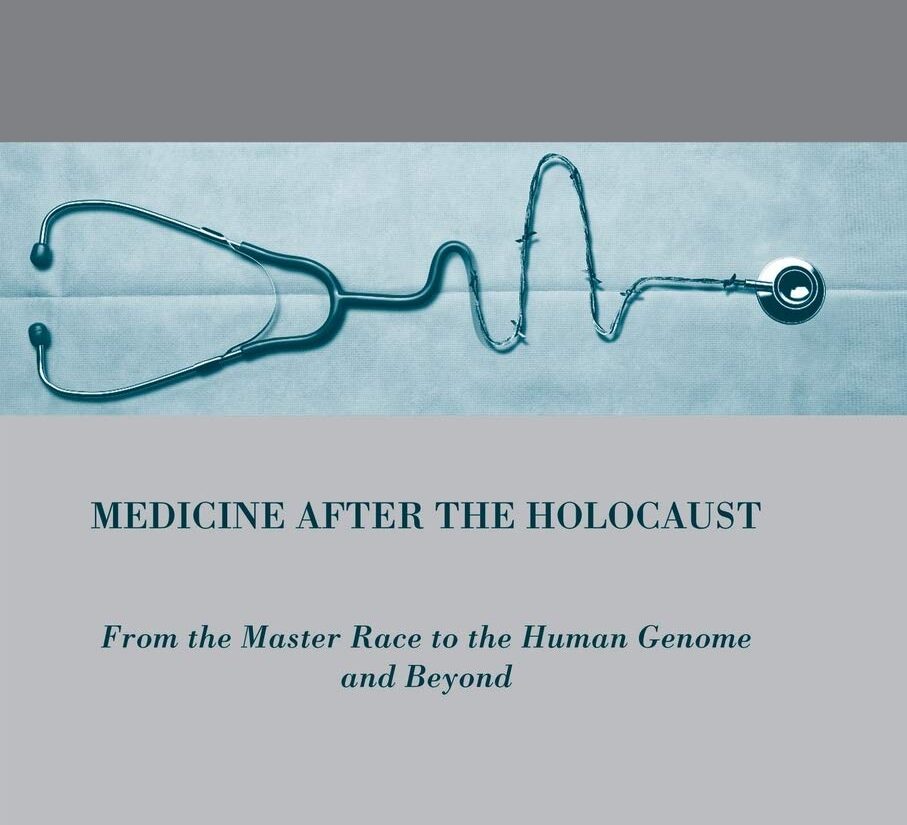
Medicine After the Holocaust: From the Master Race to the Human Genome and Beyond, edited by Sheldon Rubenfeld, is a powerful collection of essays that examines the relationship between medicine, ethics, human rights, and the lasting lessons of the Holocaust.
The book grew out of the 2007–2008 Michael E. DeBakey Medical Lecture Series at the Holocaust Museum in Houston, Texas. Rubenfeld, an internist, was motivated by his own experiences with medical ethics and helped bring together a wide range of voices, including physicians, geneticists, bioethicists, lawyers, historians, rabbis, and politicians. Of the 30 original presenters, 22 contributed essays to this collection.
At the center of the book is a deeply important question: if some of the leading physicians of the early twentieth century could abandon their patients, how can today’s physicians be certain they will not do the same? That question gives the book its urgency and makes it more than a historical reflection. It becomes a challenge to modern medicine.
The essays are organized into two main sections. The first focuses on eugenics, euthanasia, and extermination. The second looks at medicine after the Holocaust and asks what lessons should guide physicians, researchers, and society today. While the contributors come from different backgrounds and often bring different perspectives, many of the essays return to three central questions: why physicians in Nazi Germany committed evil, where the potential for evil exists in modern medicine, and what can be learned from Holocaust history to prevent future abuses.
One of the strongest themes in the book is that the physicians of Nazi Germany were not simply portrayed as irrational monsters or passive followers. The contributors generally argue that many willingly accepted and supported government policies that violated the basic duty of care owed to individual patients. These policies included involuntary sterilization, euthanasia, and mass murder. In doing so, physicians replaced care for the individual with loyalty to a dangerous idea of caring for the “body politic.”
The book also forces readers to think about modern medicine. The contributors agree that medicine today still carries ethical risks, although they differ on where those risks are most urgent. Topics include genetic testing, preimplantation genetic diagnosis, abortion, physician-assisted suicide, commercialism in medicine, global health, bioethics, and human rights. These discussions make the book feel relevant beyond its historical setting.
Another important part of the collection is its discussion of the Nuremberg Code and patient autonomy. Some contributors see the Nuremberg Code as a foundation for protecting patients from abuse, while others question whether extreme individualism is always the right answer. The book does not present one simple solution. Instead, it shows how difficult ethical questions often require serious debate from multiple viewpoints.
The review also notes that the quality of the essays varies depending on each author’s expertise and approach. Some contributions are stronger than others, and readers may disagree with certain arguments. However, that range of opinion is also part of the book’s value. It encourages readers to think critically rather than passively accept one viewpoint.
Overall, Medicine After the Holocaust is an enlightening and thought-provoking book for anyone interested in medical ethics, Holocaust history, human rights, or the history of medicine. It is especially valuable for physicians, medical students, researchers, and educators, but its message reaches far beyond the medical field.
This book is a reminder that medicine is never separate from morality. Scientific knowledge and professional skill are not enough on their own. Without ethics, humility, and a commitment to human dignity, medicine can be used to harm the very people it is meant to protect.
Book Details:
Medicine After the Holocaust: From the Master Race to the Human Genome and Beyond
Edited by Sheldon Rubenfeld
Palgrave/MacMillan, 2010
233 pages
ISBN-13: 978-0-2306-2192-3
Review Author:
Sabine Hildebrandt, MD, FAAA
